Conditions · Columbus, OH
What we help patients work through.
Optimum TMS is a specialist psychiatric practice for patients where standard treatment hasn't been enough. We focus on conditions with clear evidence-based pathways - and offer FDA-cleared options that work directly through the brain, rather than through another oral medication.
Ask us anything

Jump to:
What we treat
Depression
Depression isn't a bad week or a low patch. It's a clinical syndrome, persistent low mood, loss of interest in things that used to matter, fatigue, sleep and appetite changes, cognitive slowdown, often significant impact on work, family, and daily life.
For some patients, an SSRI plus therapy carries them through. For patients who've tried those routes and haven't gotten there, Optimum offers FDA-cleared options that work through the brain directly - TMS, Spravato (esketamine), and IV ketamine - rather than through another oral medication.
What this can look like
Treatments
What we treat
Treatment-resistant depression
Roughly a third of patients with depression don't respond adequately to standard antidepressants. After two failed medication trials at adequate dose and duration, you meet the clinical definition of treatment-resistant depression - and the math gets harder. The third medication has about a 14% chance of putting you into remission. The fourth, around 10%. The curve flattens fast.
Optimum exists for what comes after that. FDA-cleared Deep TMS, FDA-approved Spravato (the only FDA-approved medication specifically for TRD), and IV ketamine work through different mechanisms than oral antidepressants - meaning a new option, not a slightly different version of what's already failed.
What this can look like
Treatments
What we treat
Obsessive compulsive disorder
OCD is intrusive, unwanted thoughts (obsessions) paired with repetitive behaviors or mental rituals (compulsions) that the patient knows are excessive but can't easily stop. It's often hidden - patients can mask it for years before getting an accurate diagnosis - and it's frequently misdiagnosed as anxiety, since the surface presentation can look similar.
Standard treatment is ERP-focused psychotherapy paired with an SSRI. When those haven't been enough, Optimum offers Deep TMS using BrainsWay's OCD-specific protocol - separately FDA-cleared for OCD since 2018, and one of the few non-medication options with hard outcome data behind it.
What this can look like
Treatments
What we treat
Adolescent depression
Depression in teenagers often shows up differently than in adults, irritability over sadness, withdrawal that gets dismissed as "just being a teenager," declining grades, sleep disruption, or vague physical complaints. Parents can spend months unsure whether what they're seeing is hormonal, situational, or something more.
When therapy and an SSRI aren't getting their teen there - or when medication side effects are creating their own problems - TMS for ages 15 to 21 is the first drug-free option that's FDA-cleared. BrainsWay's adolescent clearance came in November 2025 based on real-world data showing a 66.1% response rate after 36 sessions. TMS is an adjunct to existing psychiatric care, not a replacement.
What this can look like
Treatments
More conditions, same standard of care
We also treat
Conditions where Optimum's interventional psychiatry options are part of a broader treatment plan, often coordinated with your existing psychiatrist or therapist.
Anxiety alongside depression
Anxiety rarely shows up alone. For many patients with depression, anxiety is alongside it - making sleep harder, motivation harder, the depression itself harder to lift. BrainsWay's Deep TMS protocol is FDA-cleared for depression with significant anxiety symptoms. We can address both at once with the same course of treatment.
PTSD and trauma
Trauma symptoms - intrusive memories, hypervigilance, avoidance, emotional numbing - often layer onto depression or persist after standard treatment hasn't been enough. Spravato and IV ketamine are off-label options here with growing research support, particularly for veterans where co-occurring depression and PTSD is common. Dr. Mark Blair is an Air Force veteran with 24+ years of service.
Postpartum depression
Depression that emerges during pregnancy or in the first year after birth deserves specialized attention. Standard options apply, but for mothers who haven't responded or who want to avoid medication while breastfeeding, TMS - with no systemic medication exposure - can be relevant. Treatment during this period requires careful coordination with your OB-GYN and pediatrician.
How we work
Diagnosis first. Treatment second.
We don't lead with a treatment recommendation. We start by understanding what you've already tried, what's actually going on, and what the most likely-to-help next step is.
Clear options
Realistic benefits, side effect profile, time commitment, and cost - explained in plain language. We tell you what the evidence actually says, including limitations.
Deliberate planning
We don't repeat what hasn't worked. We favor the options most likely to help based on your history, and we explain why we're recommending what we're recommending.
Coordinated care
TMS, Spravato, and IV ketamine can be combined when useful. We coordinate with your other providers throughout treatment, not just at the start.
Why Optimum
Specialist psychiatric care, built for the patients standard treatment hasn't reached.
MD-led since 2017
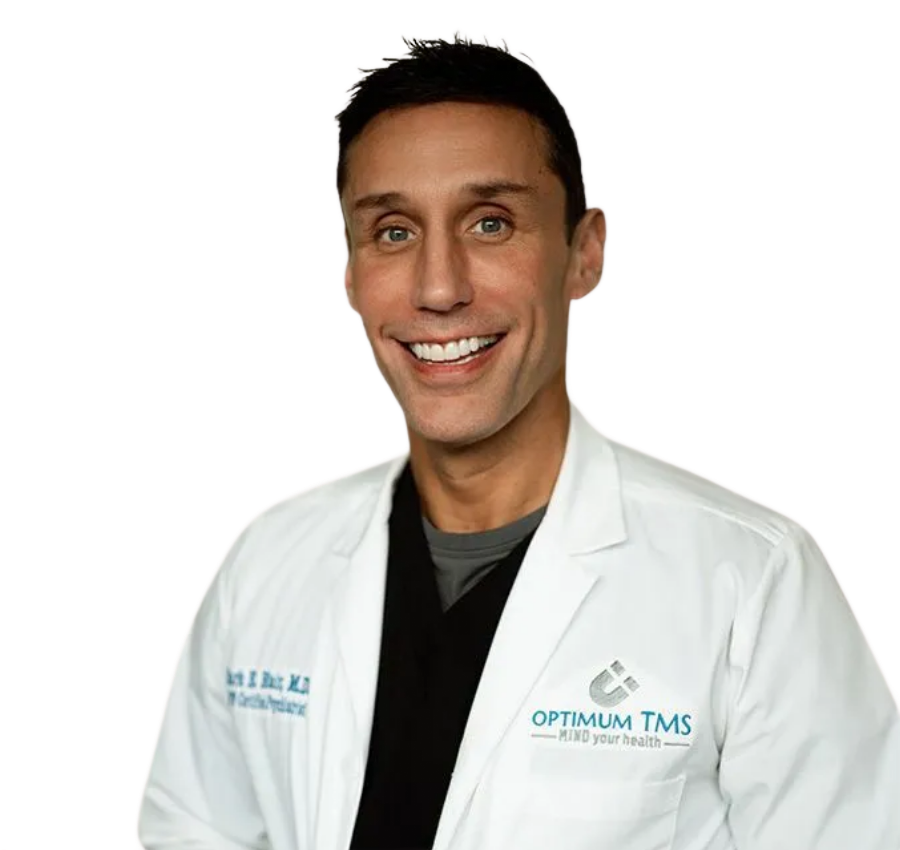
Dr. Mark Blair is ABPN board-certified and a 24-year USAF veteran. Every treatment plan is reviewed by a psychiatrist, not delegated to technicians.
Evidence-based & FDA-cleared
TMS, Spravato, and IV ketamine all have research and (where applicable) FDA clearance behind them. We don't offer treatments we can't defend on outcome data.
Coordinated, not siloed
We work alongside your existing psychiatrist, therapist, or primary care provider. Care plans are coordinated, not parallel.
Insurance verified upfront
Before treatment starts, we verify your benefits and provide a written estimate of patient responsibility. No surprises mid-course.
Outcomes tracked
Standardized assessments (PHQ-9, HAM-D, MADRS) at baseline, midpoint, and end of treatment. We measure whether it's working - and if it's not, we say so.
Honest answers
We tell you the limits of what we can offer. If you're not a good candidate for a treatment, we say so - and help you find the right next step elsewhere.
Frequently asked
What patients ask before reaching out.
Do I need a referral to be seen at Optimum?
No. You can contact us directly to schedule a consultation. If you have an existing psychiatrist or therapist, we'll coordinate with them with your permission - but you don't need a referral letter to start.
What if my condition isn't listed here?
The conditions on this page are where we have the clearest evidence base and treatment pathways. If you're working through something adjacent - bipolar depression, AUD, smoking cessation - call us. We'll tell you honestly whether Optimum is the right place, or refer you to someone better suited.
How do I know which treatment is right for me?
That's what the initial consultation is for. Dr. Blair reviews your history, what you've tried, what's worked partially, what hasn't, and what the most likely-to-help next step is. We don't push you toward our most profitable service - we recommend based on the evidence and your specific situation.
Can I stay on my current medication during treatment?
Usually, yes. TMS, Spravato, and IV ketamine are often used alongside existing antidepressants rather than as replacements. We'll review your full medication list during consultation and flag anything that might need adjustment.
What if I've already tried TMS or Spravato somewhere else?
That's useful information, not a disqualifier. Sometimes a different protocol, different equipment, or different sequencing makes the difference. Bring whatever records you have from prior treatment, and we'll review them as part of your evaluation.
Does Optimum accept my insurance?
We're in-network with most major commercial plans, Medicare, and Ohio Medicaid for FDA-cleared treatments. Coverage depends on your specific plan, the treatment, and medical necessity criteria. We verify benefits and provide a written estimate before treatment starts. IV ketamine is cash-pay.
Not sure which option fits your situation?
Take 90 seconds. Tell us what you've tried and what you're working through. We'll give you a clear, honest answer on what's likely to help - and what isn't.