Is TMS Safe for Teenagers? What the FDA Approval Means for Families
If you're a parent watching your teenager struggle with depression, you've probably already been through the exhausting loop. Therapy that helped a little. A first medication that didn't work. A second one with side effects that made things worse. Maybe a third.
And now you're hearing about something called TMS - and the first question on your mind is the right one.
Is it actually safe for my kid?
Short answer: yes, within the parameters the FDA has cleared it for. But you deserve more than a one-word reassurance. Here's what the FDA decision actually means, what the research shows, and an honest look at what TMS can and can't do for teenagers.
What the FDA Approval Actually Says
In March 2024, the FDA cleared transcranial magnetic stimulation (TMS) as an adjunctive treatment for Major Depressive Disorder in adolescents aged 15 and older. Additional device-specific clearances have followed, extending the approved range up to age 21.
Two words in that sentence matter: adjunctive and cleared.
"Adjunctive" means TMS is approved to be used alongside other treatments - typically therapy and/or medication - not as a replacement for them. Any clinic that tells you TMS alone will fix your teen's depression is overselling it. The research supports TMS as part of a combined approach, which is how we use it at Optimum TMS.
"Cleared" means the FDA reviewed the safety and efficacy data and determined TMS is safe and effective enough for this age group to be offered in clinical practice. The clearance was based on real-world data from over 1,000 adolescents treated across dozens of TMS centers in the US. That's a meaningful threshold - higher than "off-label use," which is how TMS was sometimes used for teenagers before 2024.
What the Research Shows About Safety in Teens
Here's what parents usually want to know, in plain language.
Side effects are generally mild and temporary. The most common ones are a mild headache, scalp tenderness where the helmet sits, or lightheadedness right after a session. These typically fade within the first week or two as the teenager acclimates, and most can be managed with over-the-counter pain relief if needed.
Seizures are extremely rare. This is the side effect parents worry about most when they hear "magnetic stimulation of the brain," and it's a fair concern. In the large Brainsway Deep TMS clinical programme, safety outcomes in adolescents were consistent with what's been observed in adults, where seizures are a rare event, occurring in well under 1% of patients. The majority of reported cases have involved other clear risk factors, like high alcohol consumption the night before a session or very high doses of certain antidepressants. Your teen will be screened beforehand for any factors that might raise their risk, and dosing is carefully calibrated during the first session.
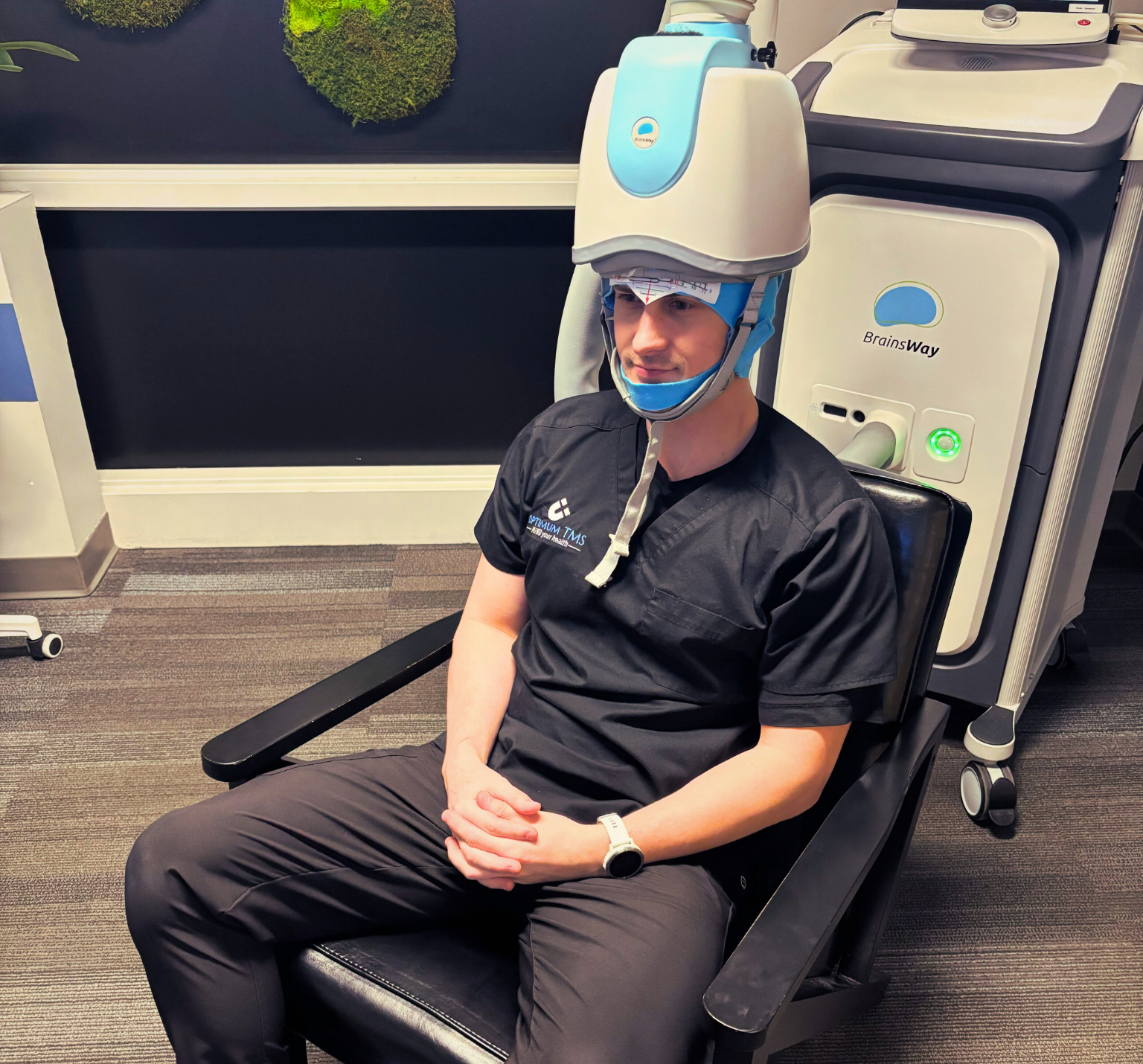
No sedation, no anesthesia, no systemic drug effects. TMS doesn't put anything into your teen's body. Magnetic pulses stimulate a specific region of the brain - the left dorsolateral prefrontal cortex, which is involved in mood regulation - and that's it. No weight gain, no emotional numbing, no sexual side effects. These are the issues that often cause teens to quit antidepressants or refuse to start them in the first place.
No impact on school or activities. Sessions last about 20 minutes. Teens can drive themselves home, go straight back to class, or head to practice. There's no recovery time. Our office hours run from 7 am to 6 pm Monday through Friday precisely, so treatment can fit around a school schedule.

Clinical Response Rates in Adolescents
The clinical data in teenagers is encouraging - though it's important to be honest about what "encouraging" means.
In the adolescent real-world data that supported the FDA's clearance:
- Around 59% of patients who completed a full course saw significant improvement in their depression symptoms
- Around 36% achieved full remission
- Those numbers are meaningfully better than typical response rates to a new antidepressant in this age group.
But they also mean some teens won't respond. That's a reality worth talking about before committing to a six-week course.
At Optimum TMS, we've been treating adults with TMS since 2017 and have helped hundreds of patients through successful treatment courses. With the FDA's expanded clearance, we're now extending that same evidence-based care to adolescent patients aged 15 and older.
Why This Matters for Your Teen Specifically
Adolescent depression isn't the same as adult depression, and the treatment trade-offs are different.
SSRIs and other antidepressants carry an FDA boxed warning for increased risk of suicidal thoughts in people under 25. Not because the medications don't work - they help many teens - but because the risk is real and has to be monitored closely.
Many families find that the combination of:
- That boxed warning
- The four-to-six-week wait for medications to kick in
- Common side effects (weight changes, fatigue, emotional flattening)
...leads to teens quitting or refusing treatment altogether.
TMS offers a different set of trade-offs. A real daily time commitment - but without the medication side effects, without the delayed onset, and without the boxed warning.
That doesn't make TMS universally better than medication. It makes it a different option - one worth considering if:
- Your teen has tried one or more antidepressants without adequate relief
- Medication side effects have been intolerable
- Your teen has refused to take medication consistently
- You're looking for something to use alongside the therapy and medication that are partially working
The TMS Dip
Because we believe in setting expectations properly, there's one thing worth mentioning that a lot of marketing-led TMS content skips over.
Around 10-15% of patients experience what clinicians call the "TMS dip" - a temporary intensification of depressive or anxious symptoms, usually occurring in the second or third week of treatment. It can feel like things are getting worse rather than better, which is understandably alarming for parents.
The dip happens because TMS is disrupting the brain's habitual patterns of activity and prompting it to form new neural pathways. Think of it like the initial soreness that comes with starting physical therapy: a signal that something is changing, not that something is wrong. For most patients, the dip resolves on its own, and the positive effects of TMS begin to appear shortly afterwards.
Dr. Blair and our team actively monitor for this during treatment. If you or your teen notices symptoms worsening at any point, we want to know about it - it doesn't mean TMS isn't working, and it doesn't mean treatment has to stop.
Learn More: TMS Benefits & Side Effects (Full Guide)
What TMS Won't Do
Being direct with you: TMS isn't a cure, and it's not for everyone.
It doesn't replace therapy. The teens who do best with TMS are the ones who continue working with a therapist during and after treatment.
Not every teen responds. That's impossible to predict in advance. The screening process helps identify good candidates, but it isn't a guarantee.
It's not a quick fix. A typical course is 36 sessions over six weeks. That's a real commitment of time and energy, and it works best when the whole family is on board.
What Happens Next
If you're thinking about TMS for your teenager, the next step is a consultation with Dr. Mark Blair - not a commitment.
Dr. Blair is a board-certified psychiatrist who founded Optimum TMS in 2017 and has been practicing psychiatry in Columbus since 2007.
A proper evaluation looks at your teen's full history:
- What they've tried
- What's worked and what hasn't
- Any other health conditions
- Whether TMS is genuinely the right fit at this stage
We handle all the insurance prior-authorization paperwork, which for most families takes between one day and two weeks to come back.
We also work alongside your teen's existing therapist and prescriber. We're not trying to replace anyone on their care team — we're adding a tool to it.
If you'd like to talk through whether TMS might be right for your child, [contact us] to schedule a consultation. No pressure, no sales pitch - just a conversation about what the options are and whether this one fits.
At what age can my teenager start TMS?
The FDA has cleared TMS for patients aged 15 and older. Younger teens may still be candidates for other treatment approaches, but TMS specifically is not approved for under-15s at this time. If your child is 15 or older, we'd be happy to assess whether they're a good fit.
Will insurance cover TMS for my teenager?
Coverage for adolescent TMS has been expanding since the 2024 FDA clearance. Several major insurers now include 15-21-year-olds under their TMS coverage - including Aetna, Cigna, Humana, and some Blue Cross Blue Shield plans - though requirements vary.
We handle the prior-authorization process for you and will tell you upfront what your coverage looks like before anything gets scheduled. If coverage isn't available, we can also discuss self-pay options.
Can my teen keep taking their current antidepressant during TMS?
Yes, in most cases. TMS is designed to be used alongside existing medication, not as a replacement. In fact, research suggests that combining TMS with an antidepressant may produce better outcomes than either one alone.
If a medication change is needed, we'll coordinate with your teen's prescriber - we won't make changes unilaterally.
How will I know if TMS is working?
Most teens who respond to TMS notice meaningful improvements somewhere between sessions 20 and 30 — so roughly the fourth or fifth week of treatment. A smaller group of patients experience a delayed response closer to the end of the six-week course.
Dr. Blair uses standardized depression rating scales at multiple points during treatment to track progress objectively, not just based on how your teen is feeling on a given day. You'll have a clear picture of whether treatment is working well before it ends.